Green Hydrogen Water Treatment: Technologies Powering Clean Hydrogen Production

"Green hydrogen" is achieved by splitting water into hydrogen and oxygen using renewable energy. But the delivery and durability of an electrolyzer is highly sensitive to the quality of the water used as a feed.

A specially developed Green Hydrogen Water treatment system guarantees that raw water is free from any dissolved solids, heavy metals, organics, or gases. If this extreme purification is not performed, trace mineral ions will precipitate on the cell electrodes, leading to rapid scaling, early deterioration of the membrane, and large decreases in the efficiency of gas production.

Electrolyzer Plant Water Requirements

The amount of water needed depends on the basic technology of the electrolyzer plant:

  • Alkaline Electrolyzers: These systems are highly robust and typically able to accept slightly lower purity feed water than newer alternatives. Even so, they need to maintain total dissolved solids (TDS) and conductivity at low levels to prevent secondary chemical reactions.
  • Proton Exchange Membrane (PEM) Electrolyzers: Requirements for absolute ultra-pure water include a target resistivity of 18.2 MΩ•cm and very low levels of Total Organic Carbon (TOC). PEM membranes have micro-porous polymer pathways, meaning the catalyst layer will be destroyed by any small particle fouling or ion contamination.
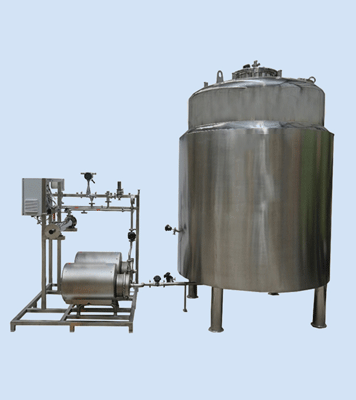
What purification technologies are deployed in Green Hydrogen Water treatment skids?

Modern treatment systems employ a multi-barrier purification process to process the huge amount of high-purity water required for multi-megawatt installations:

  • Advanced Pre-Treatment & RO: Suspended solids and microorganisms are removed by using Ultrafiltration (UF) and multi-stage Reverse Osmosis (RO) to remove most of the dissolved salts.
  • Electrodeionization (EDI): Remaining trace ions are removed using Continuous, Chemical-Free Electrodeionization Modules (EDI), increasing water to maximum resistivity.
  • Deoxygenation & Polishing: Vacuum degassers or gas-transfer membranes remove dissolved oxygen and carbon dioxide, and continuous polishing loops maintain the quality of water in the storage network.

Frequently Asked Questions

A: Drinking water minerals (such as calcium, sodium, and chloride) foul the electrodes, contaminate the hydrogen gas, and can ruin delicate components of an electrolyzer in a few hours.

A: Stoichiometrically, around 9 liters of pure water is required to produce 1 kg of hydrogen. However, taking into account filtration reject rates in real water plants, it takes around 15 to 20 liters of raw water per kg of hydrogen.

A: No. For green hydrogen water treatment, sustainable membrane technologies such as RO and EDI are used, using only electrical currents and physical pressure, avoiding hazardous chemical regenerants.

A: Yes. To upgrade secondary industrial effluent or treated sewage to pure feed water, systems can be equipped with a robust pre-treatment block (MBR or advanced oxidation).

A: The systems include automatic PLC networks connected to online conductivity meters, TOC analyzers, and dissolved oxygen sensors for real-time monitoring of pure water parameters.

All Copyrights © 2026. High Purity Water System Owned & Powered by : #1 Vinayak InfoSoft - SEO Company Ahmedabad

Request A Quote